
What Happens When Mainstream Media Watches Bitcoin Without a Frame


The Open
Bitcoin sold off when the U.S.-Iran war started.
Two weeks later it's outperforming the S&P 500, Nasdaq, and gold.
CNBC ran that headline.
And almost nobody is talking about the more interesting thing underneath: the media environment around Bitcoin just went quiet in exactly the wrong way for people who aren't paying attention.
Volume jumped 34% week-over-week to 14,700 articles across 114 outlets, but both positive and negative sentiment percentages dropped.
The whole spectrum compressed. More coverage, less opinion.
That's what it looks like when mainstream outlets are watching something they don't quite have a frame for yet.
The Gap This Week
Divergence score: 4. Previous week: 3. Both "aligned."
On the surface this looks boring.
Crypto and mainstream media agree, everything's fine, move on.
But look at what they agree on, because the composition shifted.
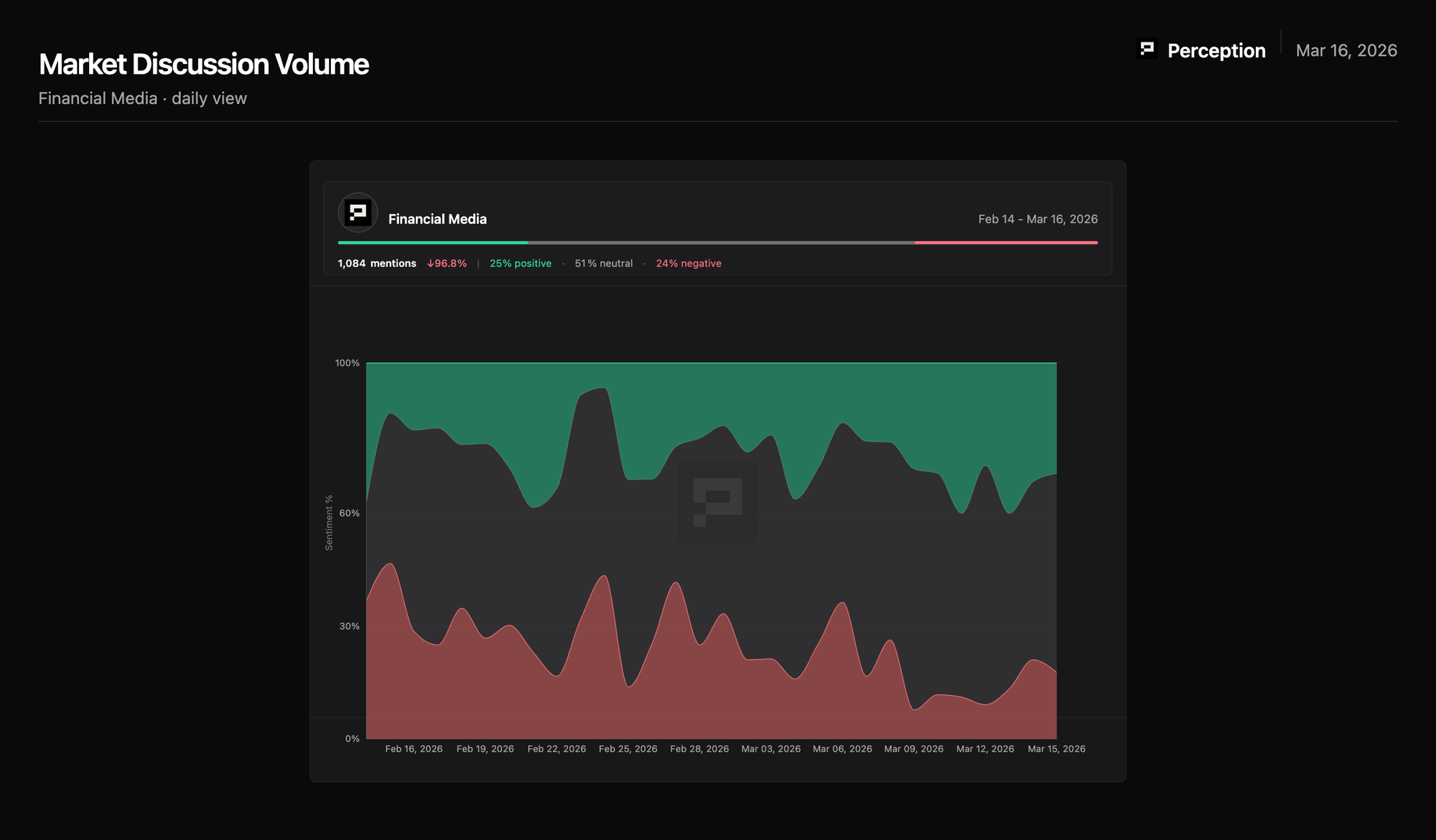
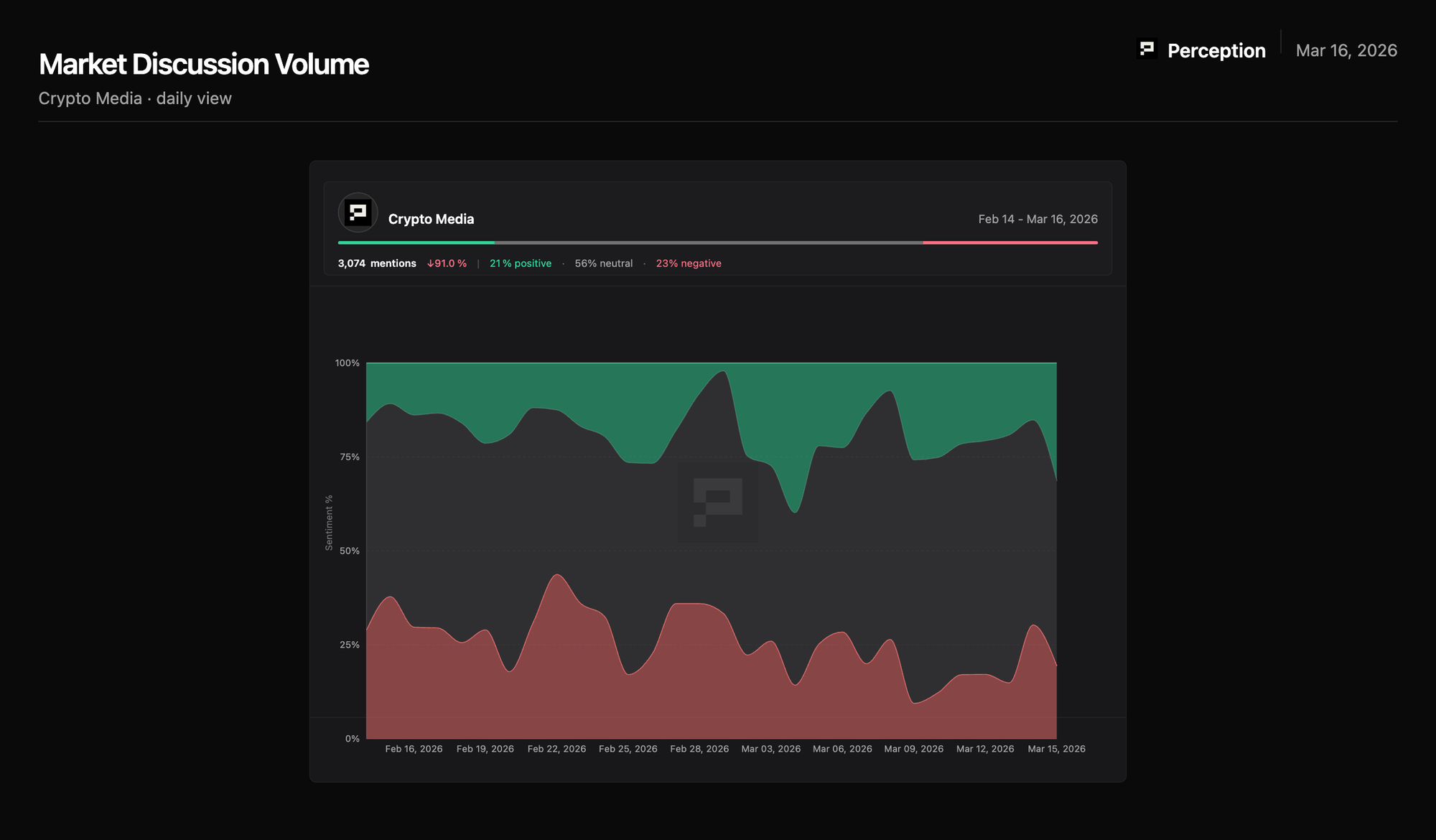
The alignment isn't consensus. It's more like a coordinated relief.
Bitcoin passing its "geopolitical stress test" is the frame both sides landed on, and when CNBC and CoinDesk converge on the same narrative at the same time, the window for counter-positioning closes fast.
If you're running comms for a public company with Bitcoin exposure, the next 5-7 days are your window to place earned media.
Editors want the "Bitcoin as macro hedge" angle right now.
That won't last past the next Fed print.
Narratives in Motion
Accelerating: The Wartime Hedge Narrative
Bitcoin spiked above $73,800, highest in a month.
CoinDesk, Cointelegraph, and CNBC all ran variations of the same story: sold off first, recovered, then outperformed everything.
Whales accumulating at $71K.
Spot Bitcoin ETFs posted five consecutive days of inflows, the first time that's happened in 2026.
This is moving fast because it's a clean story with a clean chart.
Geopolitical shock, initial sell, recovery, outperformance.
The narrative is crossing from crypto-native to financial media to mainstream.
The risk: U.S. growth collapsing to 0.7% with sticky inflation is the counter-narrative waiting in the wings. If the next inflation print is ugly, the "stress test" frame flips to "risk asset in a stagflationary environment."
For IR teams at miners and treasury companies: anchor your messaging to the outperformance data now, before the macro picture gets muddier.
Peaking: The Bitcoin Treasury Playbook
Strategy's STRC hinting at $776M in BTC buying potential.
CoinDesk running "the math behind Strategy's path to 1 million bitcoin by end of 2026."
Metaplanet launching shareholder benefits.
Kraken-linked SPAC targeting a $10B crypto firm.
When Bitcoin Magazine is writing playbook articles about how to replicate it, the early-mover advantage is gone. This narrative is peaking not because it's wrong but because it's priced in.
If you're a public company considering a Bitcoin treasury strategy, the media tailwind for announcing it is weaker than it was 90 days ago.
You'll get coverage but not the kind that moves your stock.
Emerging: Stablecoins as Geopolitical Infrastructure
Quiet but everywhere.
Circle closing in on Tether's dominance. USDC market cap nearing $80B with "capital flight" in UAE. Brazil fighting stablecoin taxes. UK central bank warming to stablecoins.
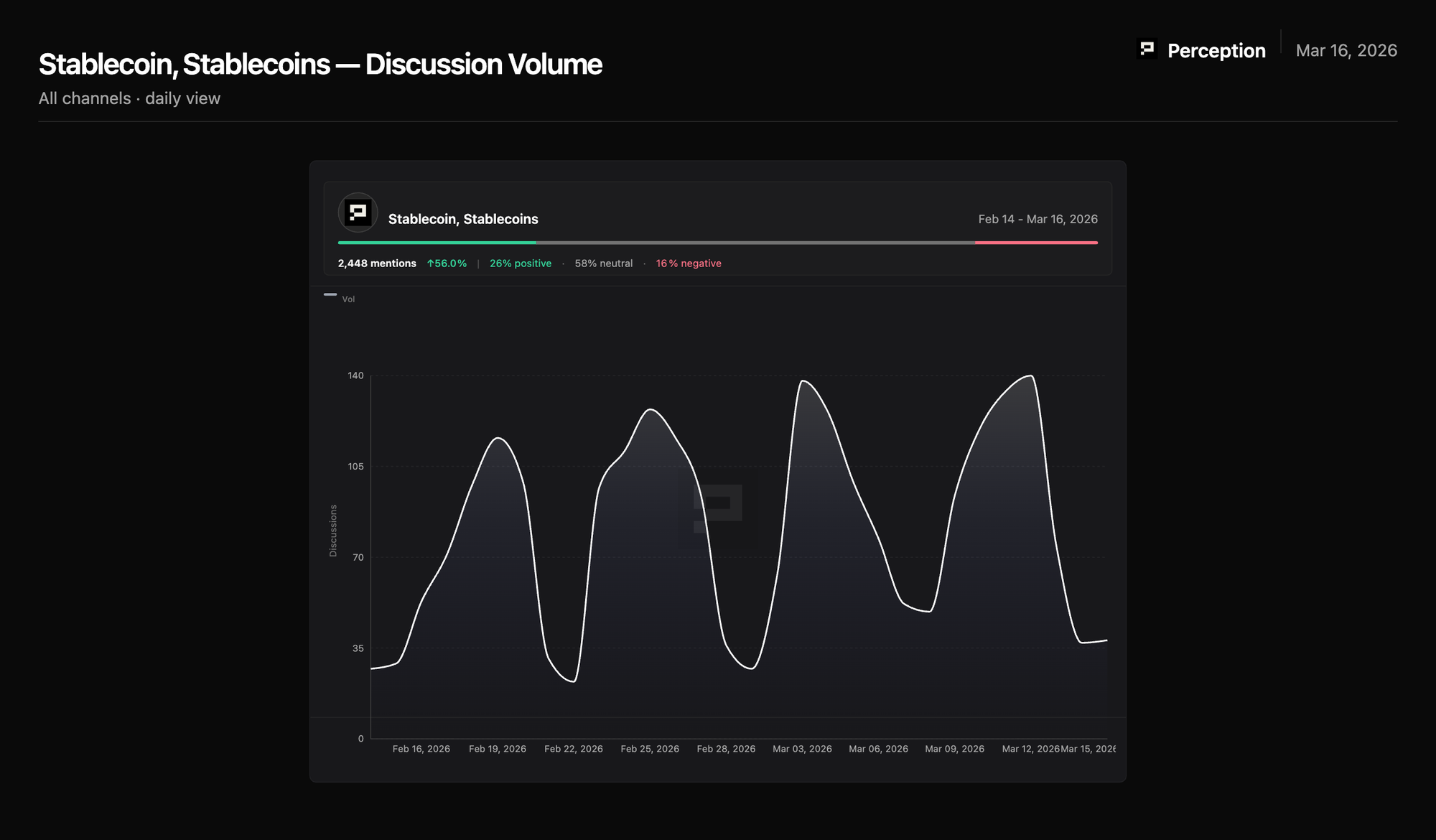
The CLARITY Act having "extremely low" odds if not passed before April creates a regulatory deadline that will force this into harder news coverage.
For policy and comms teams: this is the narrative to invest in right now.
Institutional legs, regulatory urgency, geopolitical hook.
The Close
Boris Johnson called Bitcoin a Ponzi scheme this week and Michael Saylor responded. That got four separate articles across CoinDesk, Cointelegraph, and BeInCrypto.
Meanwhile, Balaji Srinivasan quietly called for more crypto tools for refugees amid the Middle East conflict. That got one piece.
Which stories get amplified and which get buried tells you more about where a market is than any chart.